
Robotics Essentials
Class Summary
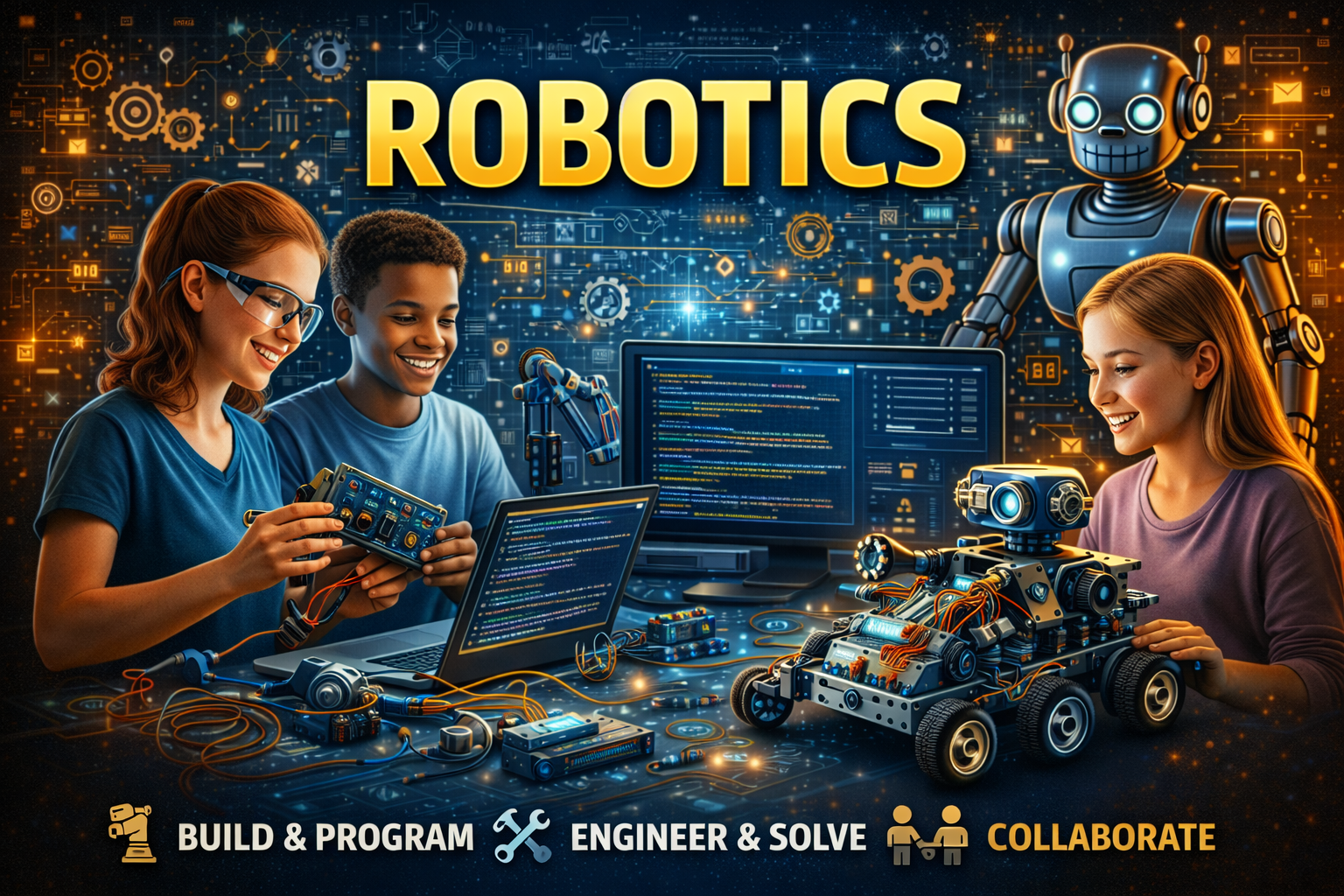
Robotics is an interdisciplinary branch of engineering that incorporates mechanical, electrical, and software engineering. At the core it requires the ability to break down complex objects into solvable parts. Solutions need to be designed, tested, improved, and implemented in order to succeed.
This course seeks to give students the opportunity to explore each of these areas and practice using engineering processes to solve practical challenges. Intended for interested students with little to no experience as well as those already reasonably familiar with each area, every student will have the opportunity to contribute to the group.
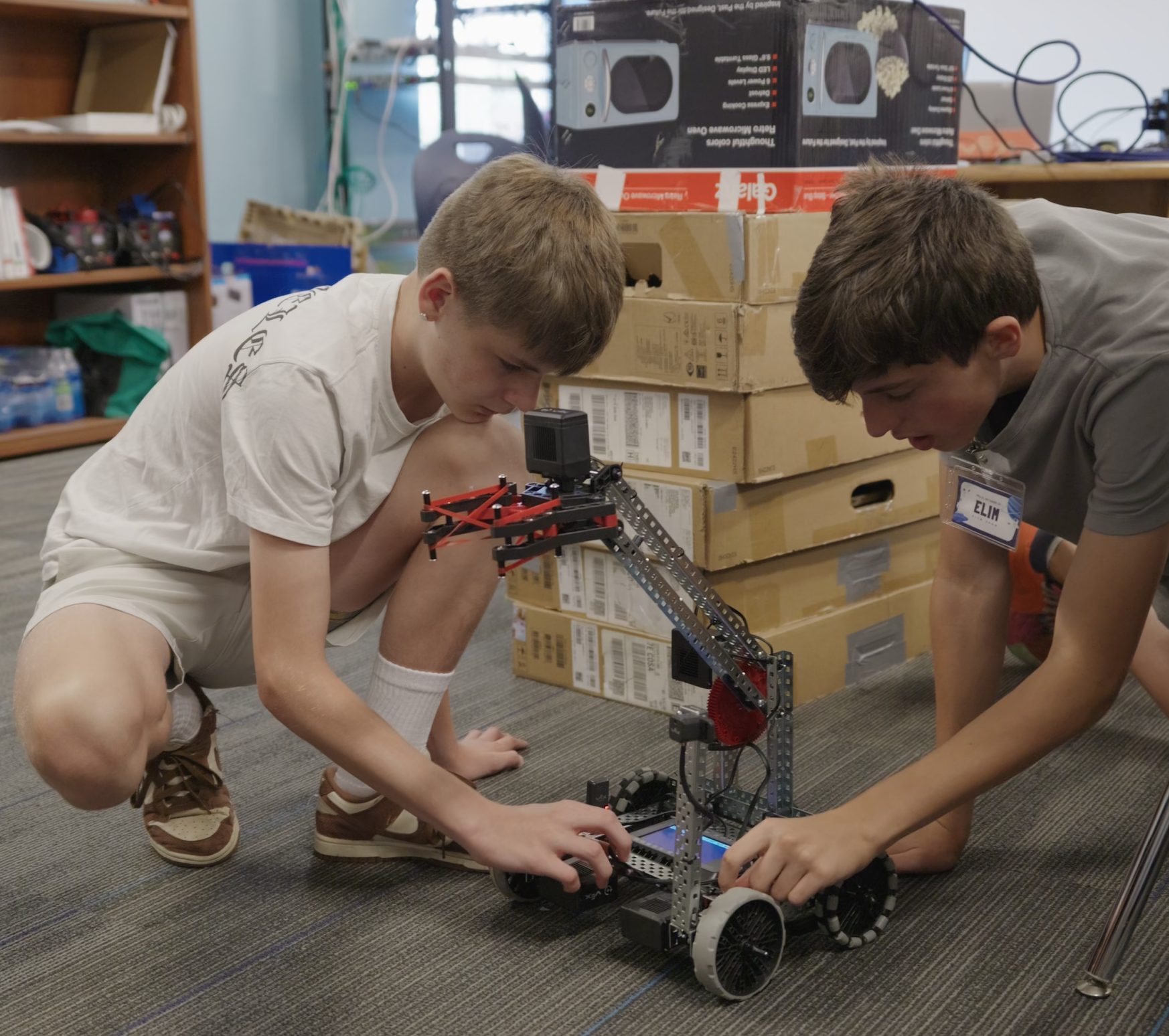
The course will include designing and building basic circuits (Breadboarding), programming arduino systems (C++), building robots (Vex V5 platform), and programming (Python) them to achieve set objectives.
Learning Objectives:
By the end of this class, students should be able to:
Read and implement simple circuit diagrams
Understand basic analog circuit components (i.e. resistors, diodes, etc)
Breadboard (wire up) simple circuits to meet objectives
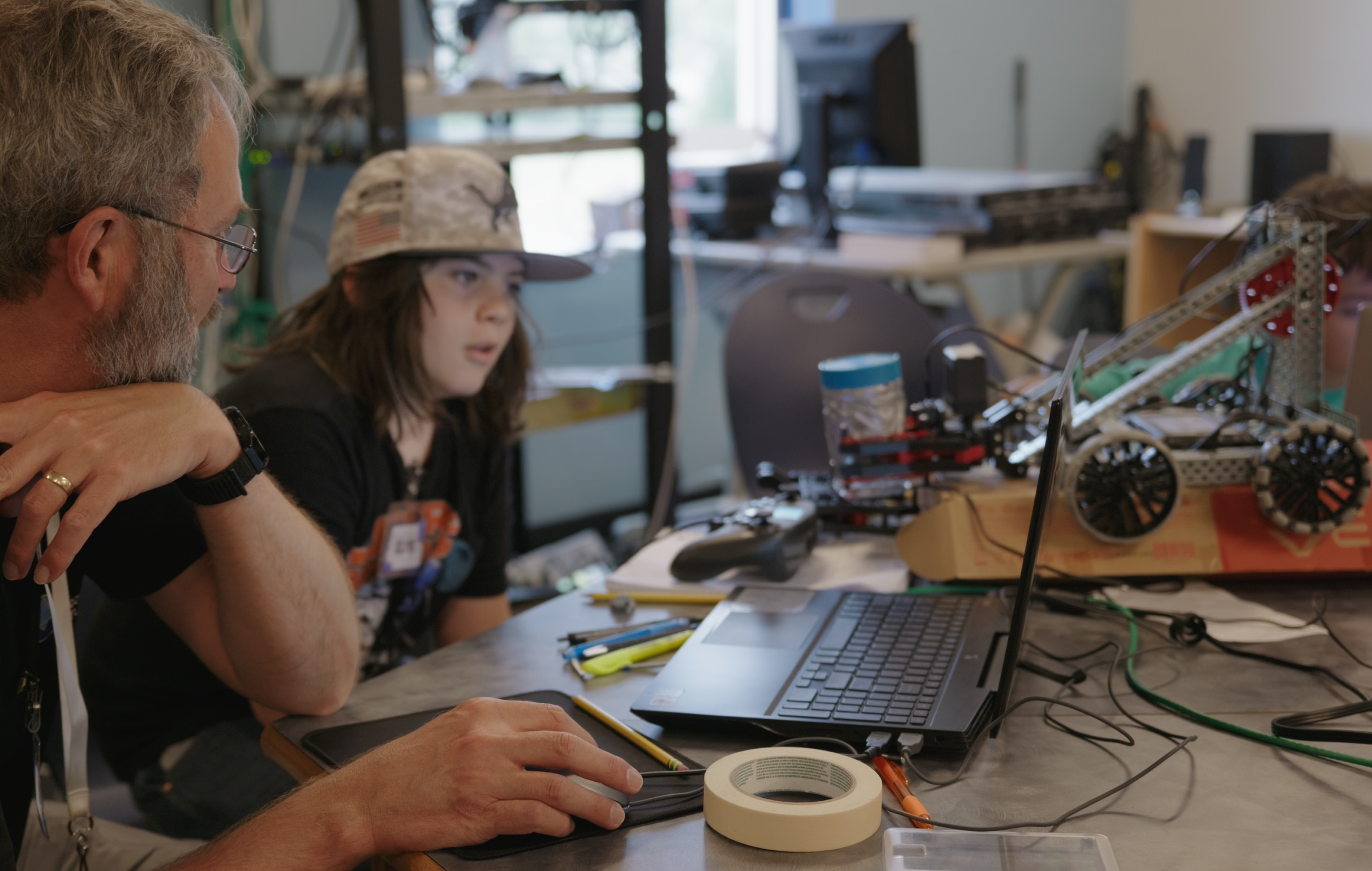
Write programs for logic controllers that utilize input and output devices/circuits
Demonstrate understanding of fundamental programming flow control and data structures
Construct and modify a physical robot with integrated motors and sensors
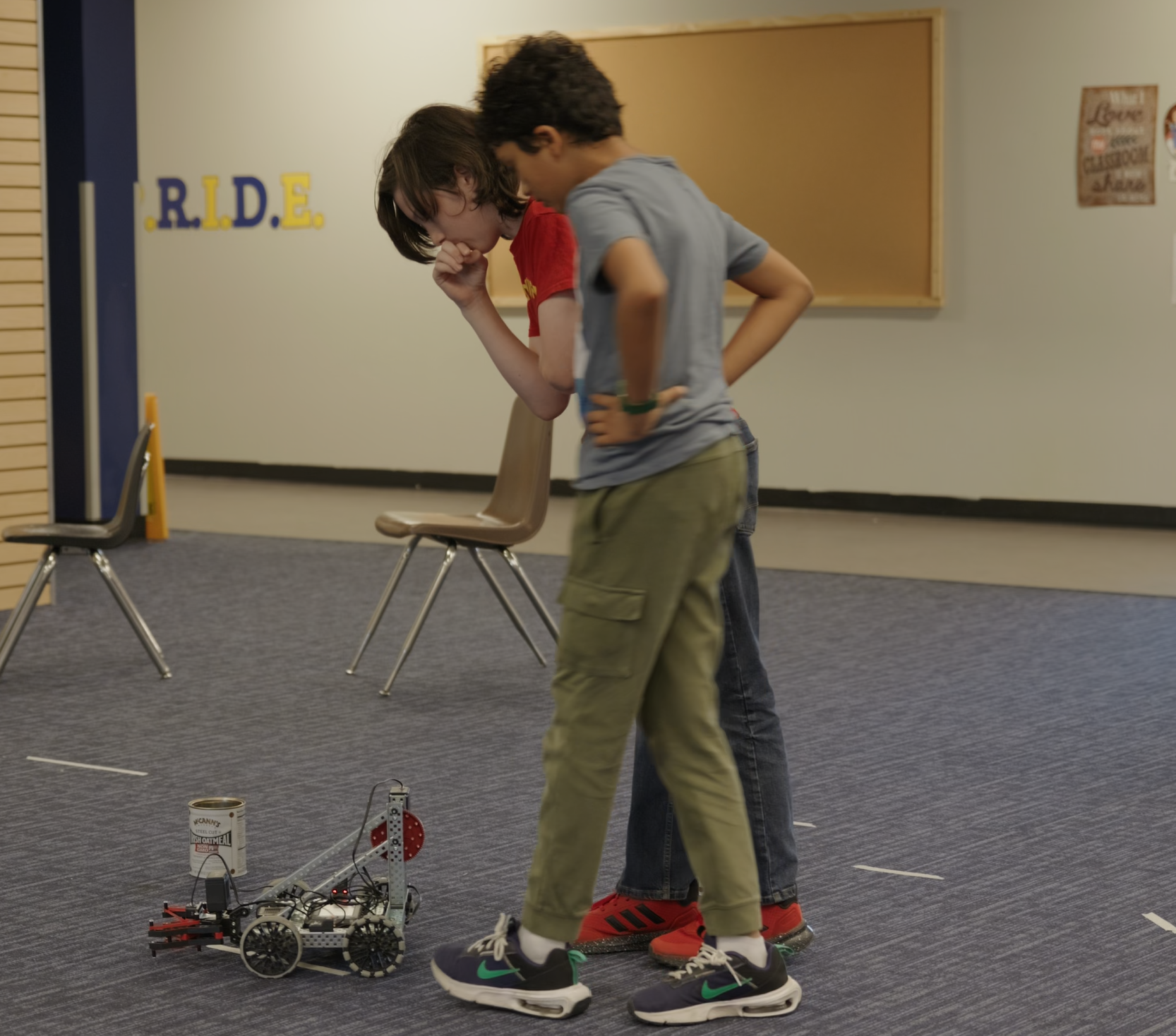
Gain confidence in their ability to solve problems on their own and in a team
Document designs (Circuits, software flows, mechanical drawings)
Fail gracefully, review causes of failures and improve designs/processes to reduce chances of repeating the same issues.
Accept and provide constructive and objective feedback to peers.
Recognize how math, science, and creativity connect to technology careers
Attributes of Students Enrolling in This Class:
Be curious about how technology works
Embrace failure and frustration as a necessary part of learning
Enjoy hands-on learning and experimenting
Be willing to ask questions and try new ideas
Be willing and able to take notes and effectively use them
Be able to perform individual research to solve problems
Have patience when troubleshooting problems
Be comfortable working independently and in teams
Show responsibility when using electronic equipment
This class is designed for intermediate learners
Basic Knowledge & Skills Recommended
Math & Logical Thinking
Basic arithmetic (addition, subtraction, multiplication, division)
Introductory algebra concepts (variables, simple formulas, patterns)
Understanding of cause-and-effect relationships
Basic understanding of boolean logical operators (AND, OR)
Science & Electronics
Basic understanding of electricity (on/off, power, energy)
Familiarity with simple scientific concepts like voltage and current (helpful, not required)
Computer & Technology Skills
Ability to touch type at an effective rate
Understanding of computer component and purpose (CPU/RAM/Storage)
Familiarity with common devices (computers, tablets, phones)
Coding & Computational Thinking
Ability to follow step-by-step instructions
Ability to create step-by-step instructions
Ability to extrapolate a solution from an analogous example / apply patterns to new applications
Understanding of basic programming concepts (variables, if/then/else, loops)
Lab Fees: $375 per semester / $750 per year
Lab fee assistance program available by application during registration (April).
Fees associated with publicly funded enrollment are subject to the applicable LEP's approved student fee schedule and applicable fee-waiver requirements. Additional financial assistance may also be available through Falcon AeroLab.